How to Choose a Used 70‑Ton Truck Crane for Infrastructure Projects in Tanzania
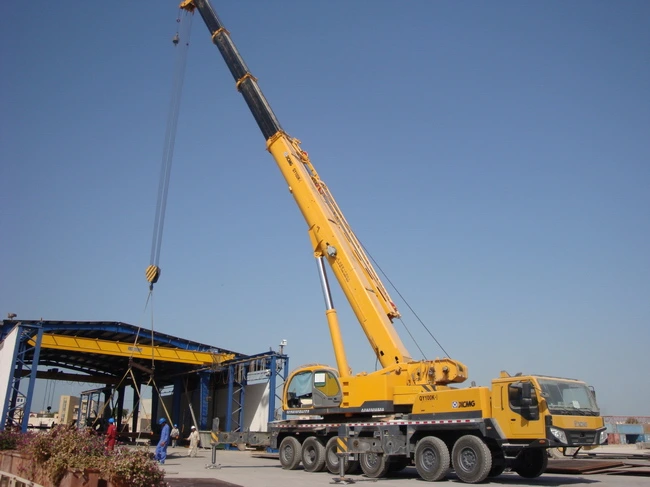
Quick Answer:For road‑bridge and building infrastructure projects across Tanzania, a well‑maintained used 70‑ton truck crane with 5‑section main boom is a practical option. Buyers should prioritize units compatible with local poor‑quality diesel, assess local spare‑parts accessibility, and complete full mechanical inspection before shipment. A valid PVoC‑CoC pre‑shipment certificate issued by TBS‑authorized agency is legally mandatory. XCMG XCT70, Sany STC700, Zoomlion ZTC700 are widely circulating on Tanzania job‑sites; Japanese brands Kato NK700, Tadano TG700 are also seen in the second‑hand market.
Key TakeawaysK:
•Indicative landed cost range: USD 58,000‑92,000. A comparable brand‑new 70‑ton truck crane lands at USD 165,000‑210,000; potential savings of 45‑55% (market estimate only).
•Mandatory document: PVoC‑CoC Certificate of Conformity, issued before export shipment by TBS‑authorized third‑party inspector; no post‑arrival retroactive issuance allowed.
•Spare‑parts reality: XCMG, Sany have local aftermarket dealers in Dar‑es‑Salaam. Kato / Tadano parts rely on independent second‑hand component suppliers; no official OEM dealership support for these used Japanese models locally.
•High‑priority inspection items: cold engine start‑up test, main hydraulic pump internal leakage, slew system wear, chassis & outrigger structural integrity, boom weld inspection, hour‑meter cross‑verification, cooling‑air‑filter condition, serial‑number consistency with export documents.
•Recommended models for local conditions: XCMG XCT70, Sany STC700, Zoomlion ZTC700, Kato NK700, Tadano TG700.
What core specifications fit Tanzanian infrastructure lifting work?
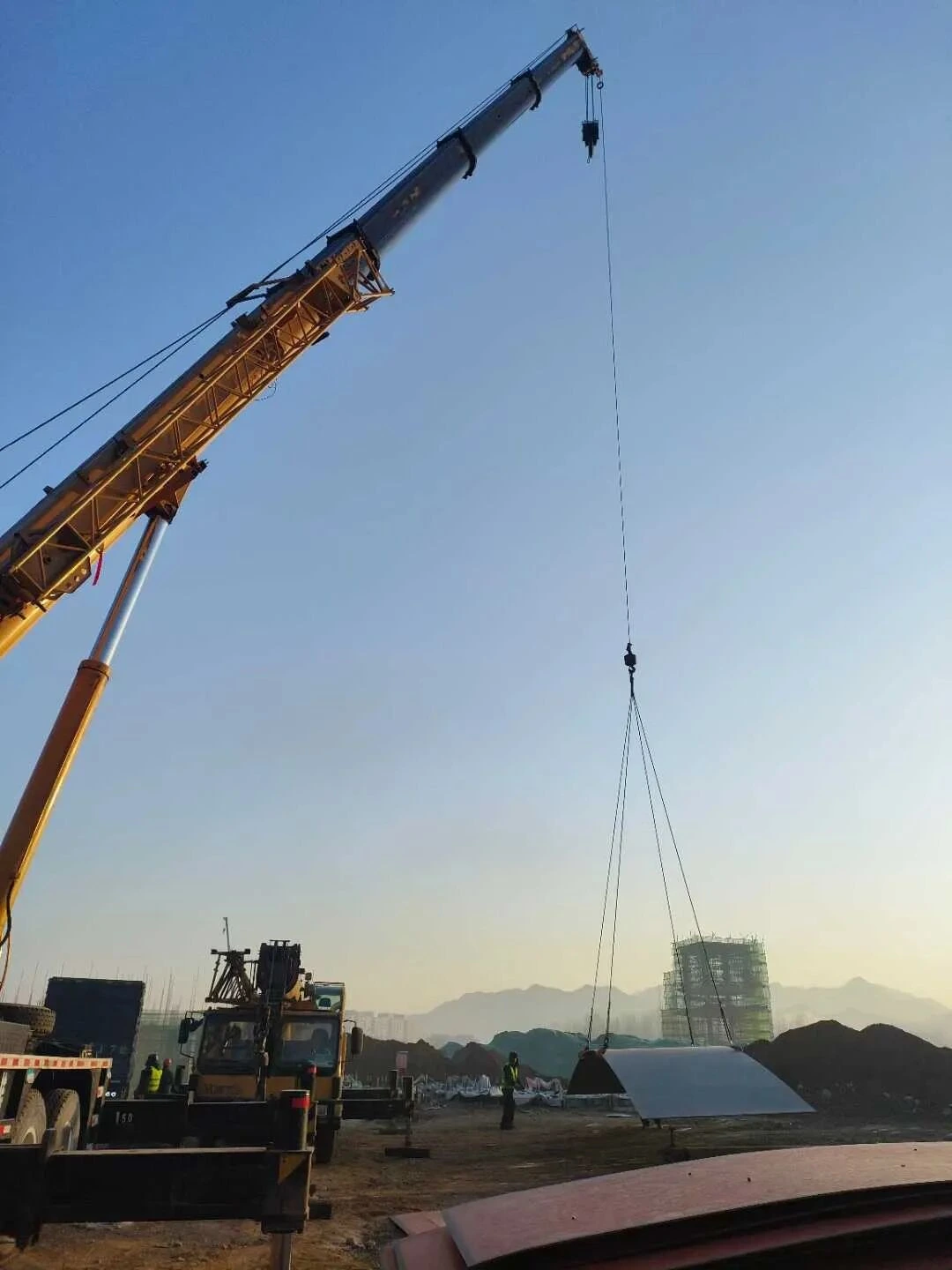
Tanzania infrastructure jobs commonly include pre‑cast bridge beam lifting, steel‑structure erection, municipal road maintenance and equipment installation. Operating conditions feature high ambient temperature, heavy dust, uneven unpaved site roads, and inconsistent quality of local high‑sulfur diesel fuel. Not all “70‑ton” advertised cranes are suitable for this environment.
Table 1 Recommended specification ranges for used 70‑ton truck crane for Tanzanian infrastructure
Specification | Recommended working range | Practical explanation for Tanzania site conditions |
|---|---|---|
Rated lifting capacity | Serviceable heavy-duty configuration | Below rated capacity will limit bridge pre-cast beam lifting; heavier units face inland over-weight transport penalties on Tanzanian roads |
Main boom | 42-48 m, 5-section boom | Fits most bridge and building height requirements; optional 9-16 m jib for high-altitude light-load lifting |
Counterweight | 22-28 t full set | Incomplete counterweight severely reduces safe lifting capacity; soft ground on-site increases subsidence risk for heavy counterweight |
Engine power | 210-260 kW | Balances travel and lifting performance; direct-injection engines show better tolerance to inconsistent local diesel quality compared to high-pressure common-rail units |
Working hours | 3500-9000 h | Market-based practical reference. Units below 3500 h command large price premium; machines above 9000 h have elevated risk of hydraulic pump / slew reducer overhaul within 1-2 years. No official government hour-limit regulation |
Year of manufacture | 2014 or newer (practical suggestion, NOT legal requirement) | Tanzania has NO statutory import age restriction for used construction machinery. Older pre-2014 units face stricter physical inspection under PVoC scheme and suffer poorer spare-parts availability |
Emission standard | Euro 3 / Euro 4 | There is no strict emission enforcement for imported second-hand cranes, but older Euro-2 equipment shows higher fuel consumption and frequent breakdown risk on-site |
Cooling system | Well-maintained / recently serviced | Dust-clogged radiators are the top cause of crane overheating and unplanned downtime during hot dry seasons in Tanzania |
LMI Load Moment Indicator | Fully functional | Critical safety device. Local site lifting operations often lack strict supervision; defective LMI creates major safety hazards |
Chassis & tires | Serviceable heavy-duty configuration | Poor rural unpaved access roads lead to frequent tire damage and chassis stress |
Note: This table reflects field‑proven practical parameters, not legal mandatory standards.
Within these ranges, XCMG XCT70, Sany STC700, Zoomlion ZTC700 are widely imported Chinese models; Kato NK700 and Tadano TG700 are common Japanese second‑hand units in Tanzania. Local aftermarket parts stock for Chinese brands is more accessible in Dar‑es‑Salaam.
Which inspection points should you verify before buying a used 70‑ton truck crane?
1. Engine: Cold‑start recording video, oil‑sample analysis or compression test, check for active ECU fault codes.
2. Main hydraulic pump: Inspect case drain leakage, perform lifting / luffing cycle‑time test. Worn hydraulic pumps carry very high replacement cost.
3. Slew motor & slew bearing: 360‑degree loaded slew test; check for abnormal play, noise or hesitation.
4. Chassis & outrigger structure: Inspect outrigger cylinder oil leakage, box‑structure deformation, frame weld integrity. Soft ground conditions make outrigger reliability critical for Tanzania sites.
5. Boom & arm welds: Look for re‑welded cracks, especially on boom root sections — a common failure point for cranes used for heavy bridge‑beam lifting.
6. Hour‑meter verification: Cross‑check meter reading against wear level of seat, joysticks and pedals. Meter‑rollback is a well‑known risk in used heavy‑equipment trade.
7. Cooling and air‑intake filtration: Inspect radiator fin condition and air‑seals; dust ingress is a major source of premature component wear in Tanzania.
8. Serial‑number matching: Chassis nameplate serial number must match sales contract and PVoC‑CoC application documents.
Practical tip: Request full‑length inspection video covering cold start, slew, hoist, luffing and outrigger extension before final payment.
What is the landed‑cost breakdown for shipping to Tanzania?
Below is 2026 market indicative pricing (non‑official data) for used 70‑ton truck crane shipped from Chinese port to Dar‑es‑Salaam. Actual cost fluctuates with freight market, customs valuation and local agent charges.Table2 Landed‑cost breakdown, used 70‑ton truck crane, China to Dar‑es‑Salaam
Cost Item | Estimated USD range | Notes |
|---|---|---|
Machine FOB China (2014-2020, 3500-9000 h) | 75000 | XCMG / Sany / Zoomlion within this band; Japanese Kato / Tadano units may sit at higher end |
Ocean freight (China to Dar-es-Salaam) | 8500-11000 | Flat-rack / break-bulk vessel; transit time 32-42 calendar days |
PVoC-CoC conformity certificate | 500-700 / Unit | per unit Mandatory; issued by TBS-authorized third-party before export shipment |
Tanzania customs clearance & import-tax | 19000-20000 | Calculated under TanESW / TANCIS customs single-window system; final duty depends on customs valuation and HS code classification |
Inland haulage (Dar-es-Salaam to site: Mwanza / Arusha) | 6000-7800 | Low-bed trailer; cost varies greatly with site distance and road condition |
Total indicative landed cost | 120000 | For reference only, not binding quotation |
Standard trade‑term risk division under FOB:
Seller’s responsibility: machine condition before loading, full set of export documents, obtaining PVoC‑CoC before vessel departure.
Buyer’s responsibility: ocean‑freight insurance, destination‑port charges, import duties, local clearance, inland transportation after vessel sails.
DDP terms can re‑allocate risks, but must be explicitly written in sales contract.
Import workflow summary:
•Select and inspect unit in China
•Sign sales contract, adopt staged‑payment arrangement
•Acquire PVoC‑CoC certificate before loading
•Ocean shipment to Dar‑es‑Salaam port
•Customs clearance via TanESW single‑window platform
•Inland trucking to construction project site.
What are the most common pitfalls for importing cranes to Tanzania?
1. Cosmetic repainting conceals structural cracks & oil leaks: Fresh paint hides boom‑root cracks and hydraulic leakage. Risk mitigation: comprehensive real‑machine inspection video before deposit.
2. Missing valid PVoC‑CoC certificate: Cannot obtain this certificate after arrival at Tanzania port. Penalties include fines, daily demurrage, or even forced re‑export of the machine. Risk mitigation: Confirm CoC is issued before releasing balance payment.
3. Rolled‑back hour‑meter: Do not trust hour‑meter reading alone; cross‑verify with physical wear of cabin controls and maintenance records.
4. Mismatched serial‑number between contract and actual machine: Risk mitigation: write chassis serial‑number clearly in sales contract and cross‑check against PVoC‑CoC document.
5. Ambiguous risk‑transfer point: Who bears damage risk during port lifting and unloading must be agreed in written contract.
How was this buying guide compiled?
This guide is based on FairTradeMachinery's transaction and inspection records covering an inventory of more than 10,000 used units across 15 brands, and on machines actually delivered to bridge, highway and port infrastructure projects in Tanzania between 2024 and 2026. Selection weighs four critical criteria: rated lifting capacity and boom configuration suited to pre-cast bridge beam and factory hall heights (a 70 t unit with a 42–48 m, 5-section main boom and a full 22–28 t counterweight set); tolerance of inconsistent local diesel and dust (direct-injection engines and well-maintained cooling systems); documented working-hour history of 3500–9000 h, with units below 3500 h commanding a price premium; and resale value in the East African secondary market. Price ranges reflect an indicative landed cost of USD 58,000–92,000 per unit (FOB China USD 42,000–70,000, ocean freight USD 6,200–8,500, PVoC–CoC conformity certificate USD 750–1,100, Tanzania customs clearance USD 5,000–9,000, and inland haulage USD 800–2,400); import figures should be re-confirmed with your clearing agent against the latest TanESW/TANCIS tariff and HS code classification. Regulatory references (PVoC, CoC, TanESW/TANCIS) were reviewed against the latest Tanzanian Bureau of Standards and customs guidance in October 2026.
FAQ
Is there legal age limit for importing used truck cranes to Tanzania?There is no statutory age‑limit law for used construction machinery import. However older units manufactured before 2014 will receive stricter physical inspection during PVoC verification, and spare‑parts supply becomes difficult. PVoC‑CoC certificate is mandatory for all used mobile machinery regardless of manufacturing yearTanzania B....
Which port is primary entry point for 70‑ton cranes into Tanzania?
Dar‑es‑Salaam is the main heavy‑equipment port. Tanga port is an alternative option but has limited berth capacity for over‑dimension heavy‑lift cargo.
Can four‑section‑boom 70‑ton crane handle bridge‑beam lifting work in Tanzania?
Four‑section‑boom versions have shorter maximum boom length. It works for short‑radius lifting scenarios. Five‑section main‑boom configuration offers far higher flexibility for most bridge‑construction projects.
Can I import without PVoC‑CoC and obtain documents after arrival in Tanzania?
No. PVoC‑CoC must be issued in exporting country before shipment. Post‑arrival issuance is not permitted under TBS regulation. Non‑compliance will trigger fines, demurrage or re‑export orders.
Who arranges PVoC‑CoC certification?
Normally arranged by exporter before loading. However buyer must confirm the document format is fully accepted by TBS authority before shipment.
Sources
•Tanzania Bureau of Standards (TBS). PVoC Pre‑Shipment Verification of Conformity official guidance:http://huayutest.com/zixun/95003.html
•Tanzania Revenue Authority (TRA). TanESW / TANCIS customs single‑window system documentation.:https://www.tra.go.tz/
•Freight spot quotations Q3‑2026 for China‑Dar‑es‑Salaam break‑bulk / flat‑rack cargo:https://www.greathensen.com/zh/guide/south-east-africa-shipping-rates.html
Published: 2026‑10‑22
Last reviewed: 2026‑10‑22
Author: 【Flora He 】Equipment Inspector, FairTradeMachinery
FairTradeMachinery
Usted Diseña la Visión. Nosotros Nos Encargamos de las Partes Difíciles.
Ayudando a Compradores Globales a Acceder a Maquinaria y Soluciones Postventa de Mejor Valor.
Como la Principal Plataforma de Intercambio de Maquinaria Usada Global de China, estamos en la intersección de la tecnología IoT y el comercio B2B. Eso significa datos de inventario en tiempo real, perfiles de vendedores verificados y un proceso de transacción diseñado para compradores transfronterizos que no siempre pueden inspeccionar máquinas en persona. Nuestros usuarios en China han superado los 1,5 millones, lo que significa que tenemos la primera fuente de propietarios de excavadoras y el número equivalente de máquinas. Esto significa que podemos cubrir todos los modelos populares e incluso necesidades específicas, sin importar el estado.






 Chat en vivo en Whatsapp ahora


 FAQs
 WhatsApp